



05 Sep Roe Ethridge
In this episode of Twilight Talks, Kevin Moore interviews Roe Ethridge, a postmodernist commercial and art photographer. Roe talks about Goldman Sachs, hurricanes, and the dark and the light in his latest show.

Arnaud Gerspacher wrote a new post on the site Art in Times of Environmental Crises 2 hours, 37 minutes ago
June 18 Slow ViolenceReadings: Nixon-slow-violence-and-the-environmentalism-of-the-poor
Arnaud Gerspacher wrote a new post on the site Art in Times of Environmental Crises 2 hours, 38 minutes ago

Anthony Picciano wrote a new post on the site Tony's Thoughts 4 hours, 28 minutes ago
"Science" Editorial: Defending the Research Project Grant Process Dear Commons Community, Today’s edition of Science has a guest editorial by Pierre Azoulay, an International Programs Professor of […]
Anthony Picciano wrote a new post on the site Tony's Thoughts 4 hours, 56 minutes ago
Video: Pope Leo’s "6-7" Hand Gesture Connects with Young People! Image credits: expensivethrift/X Dear Commons Community, Pope Leo XIV has gone viral after surprising crowds in Madrid with an […]

Jeanette Rojas wrote a new post on the site Jeanette's Digital Diary 10 hours, 22 minutes ago
Symbolic Annihilation of Mexican Women at the 2026 World Cup: A Mexican's Opinion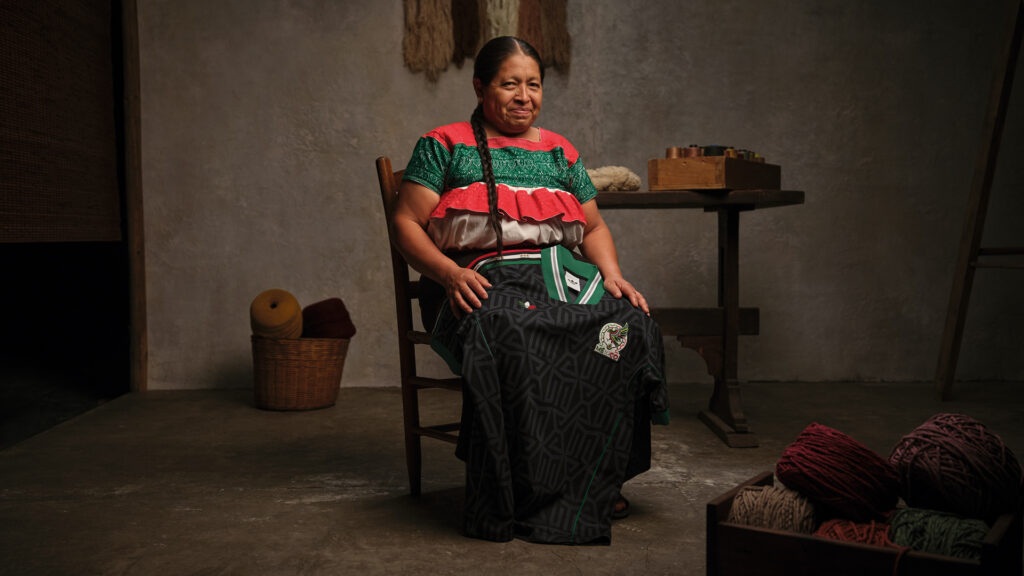 By observing media artifacts, intercultural communication scholars are able to raise questions about representation and symbolic annihilation. To illustrate the notion of symbolic annihilation, I bring an Adidas press release kit for a 2026 World Cup sportswear campaign featuring a new version of the Mexican men’s national soccer team jersey made by artisan garment workers from rural Mexico, focusing on a single photograph from the press kit. Symbolic annihilation describes the lack of representation of women and marginalized groups in media content and defines the existing sparse representations as marginal, trivial, or victimized. Specifically, this image shows how dominant institutions (like Adidas and FIFA) neutralize garment-making traditions originating from indigenous Mexicans by trivializing the photographed Mexican woman’s garment artistry. Specifically, the image does not convey the woman’s technical skill and reveals little about her creative process, effectively neutralizing her by rendering her to a beaming smile brandishing the jersey. Notably, the minimalist set is comprised of earth tones, with low key light, and without a single piece of modern equipment or machinery. While I am not a garment worker in Mexico, I am a Mexican living in New York City, and this lived experience informs how I perceive the press about the 2026 World Cup. As a NYC local, I am bracing for impending overcrowding and unkempt states of the spaces I deem culturally significant to me. This mindset informs my skepticism about how the photograph from the Adidas press kit f […] “Symbolic Annihilation of Mexican Women at the 2026 World Cup: A Mexican’s Opinion”

Adam Scott Wandt wrote a new post on the site Adam's Antics 21 hours, 17 minutes ago
The Wandt AI Disclosure Label (WADL): A Two-Way FrameworkOver the last few semesters, like so many of my colleagues in higher education, I have struggled with how to address generative AI in the […]
Anthony Picciano wrote a new post on the site Tony's Thoughts 1 day, 5 hours ago
Today is a Travel Day – Going to Seattle! Dear Commons Community, My wife, Elaine and I, will be traveling to the beautiful city of Seattle today to visit my daughter and her family. Tony
Anthony Picciano wrote a new post on the site Tony's Thoughts 1 day, 5 hours ago
United States DOJ Investigating CUNY’s Black Male Initiative Harmeet K. Dhillon assistant attorney general for the Justice Department’s Civil Rights Division. Andrew Harnik/Getty Imag […]
Jeanette Rojas wrote a new post on the site Jeanette's Digital Diary 1 day, 20 hours ago
Oprah Winfrey, No Contact Parent-Child Relationships, and MyselfWhen reading about how relational dialectics manifest in our personal relationships, I learned that awareness about relation dialectics, which are a set of needs for every person in a relationship that must be negotiated by those involved, is only a small part of navigating interpersonal relationships. According to L.A. Baxter, there are four ways people can manage dialectical tensions in their interpersonal relationships. For this post, I want to focus on Baxter’s fourth option for handling dialectical tension between people in a relationship, the option to reframe the dialectical tension, utilizing Oprah Winfrey’s podcast episode interviewing adult children who have initiated no-contact relationships with their parent(s). I write about this podcast episode to apply Baxter’s option of reframing dialectical tensions because in this episode, a few of the interviewed children discuss their no-contact boundary with their parent(s) as a necessary measure of protection for themselves and their own children. These testimonials reveal how a child’s reframing of their no-contact measure clarifies that no-contact does not contradict or oppose that child’s love for their parent(s). As someone who has established a no-contact boundary with my parent, I realize that I also engage in reframing my strategy for managing the dialectical tension between myself and my parent, like the testimonials do in Oprah’s podcast. I also reframe the no-contact boundary as ultimately supporting my relationship with my parent because no communication is never contradicting or […] “Oprah Winfrey, No Contact Parent-Child Relationships, and Myself”

Naima Jean-louis (She/Her) wrote a new post on the site Exploring the Art of Communications 1 day, 21 hours ago
Lost in Translation Across Cultures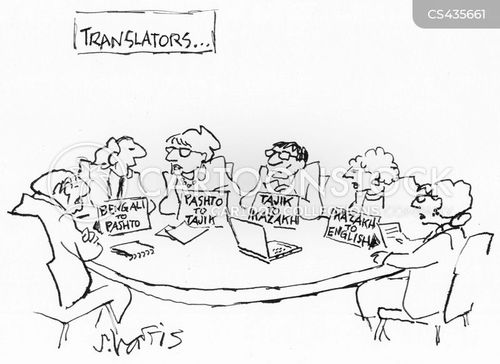 Editorial Cartoon Analysis Key Term: Language and Culture Subheading: Language and Intercultural Communication This cartoon relates to […]


No Comments